AI Agents for Infrastructure Monitoring

WorkAgentic builds AI agents for infrastructure monitoring that track server, network, and system health continuously, so IT teams stop finding out about a failing system only after users start complaining.

★★★★★4.9 / 5
No technical team neededBuilt by CPAs
Book a Free IT Workflow Audit

No commitment. Response within 24 hours.

Infrastructure Monitoring

Six infrastructure monitoring tasks your team stops running manually

Each agent tracks system health automatically. No manual dashboard checks, no failing system that goes unnoticed until users complain.

Automatic Infrastructure Data Aggregation

  • Server, network, and cloud health data pulled automatically from every monitored system
  • CPU load, memory usage, disk space, and connectivity combined in one view
  • No manual dashboard checks needed to bring system health together
  • New infrastructure components added to the monitoring inputs without a rebuild
  • Missing or delayed health data flagged instead of monitored on partial signal

Health and Performance Analysis

  • Performance signals analyzed against a healthy baseline automatically
  • Analysis configured to reflect what your team defines as normal for each system
  • System-level breakdown available so a tech sees exactly what's degrading and why
  • Different baselines supported for different system types or environments
  • Analysis applied consistently across every system, no manual comparison

Real-Time Uptime Monitoring

  • Status checked continuously across every monitored server and service
  • Dashboard always reflects current uptime, not a static periodic check
  • Downtime events logged so a tech can see exactly when and how long a system was affected
  • Monitoring frequency matched to how critical a given system is
  • An intermittent connectivity issue flagged before it becomes a full outage

Degradation Alerts

  • A system trending toward a failure state triggers an alert automatically
  • Alerts routed to the right on-call tech based on system ownership rules
  • A degrading system surfaced while it's still a warning, not yet an outage
  • Multiple severity tiers supported, such as early warning and critical failure
  • Alert timing tuned so intervention happens before users are affected

Monitoring Threshold Tuning and Feedback Loop

  • Health thresholds refined automatically using which alerts turned out to matter
  • Monitoring accuracy improves the longer the agent runs against real system behavior
  • Manual override available where a tech's own judgment should take precedence
  • Threshold recalibration reviewed with your team before being applied live
  • Monitoring changes logged so alert shifts are never a surprise

Infrastructure History and Audit Log

  • Every health event logged with a timestamp and the system it affected
  • Historical uptime and performance available for comparison without manual reconstruction
  • Threshold version tracked so an alert shift can be traced to a specific change
  • An incident's full timeline tied back to every health signal that led there
  • History retained even after infrastructure or monitoring criteria have changed

Client Reviews

What IT teams say after going live

4.9
★★★★★
Verified clients
★★★★★

A server's disk space had been filling up for days before anyone noticed, and we only found out when the system crashed and users started calling. WorkAgentic flags a system trending toward failure automatically now, and that reactive scramble is gone.

★★★★★

We had a dozen dashboards for a dozen different systems and no single view of what was actually healthy versus what was quietly degrading. WorkAgentic analyzes health against a baseline automatically now, so we know exactly what's degrading and why.

★★★★★

A network connection had been intermittently dropping for a week before it finally caused a full outage during a critical shift. WorkAgentic catches an intermittent issue like that now, well before it escalates to a full outage.

★★★★★

Our alert thresholds were set once when we first deployed our monitoring tools years ago and never adjusted, so we either missed real problems or got buried in noise from thresholds too sensitive for how our systems actually behave. WorkAgentic tunes thresholds automatically now, using which alerts actually mattered.

★★★★★

After an outage, we could never reconstruct exactly what health signals had led up to it, because nobody kept a timeline beyond the incident ticket itself. WorkAgentic keeps a full infrastructure history automatically now, so we can trace any incident back to the signals that preceded it.

Our Process

How we deploy your infrastructure monitoring agent

Five structured steps from scoping to go-live. No disruption to your existing infrastructure or systems.

01
Discovery and Infrastructure Audit
Free 30-minute call. We map your systems, current monitoring tools, and where the biggest visibility gaps are today.
02
Agent Design and Scoping
We define monitored systems, health baselines, and alert thresholds before building anything.
03
Build and Integration
We connect the agent to every server, network device, and cloud resource in your environment. No internal IT project required to launch. We handle all integrations.
04
Pilot and Validation
The agent monitors in parallel with your existing tools for one full cycle. Health signals are compared side by side before handoff.
05
Go-Live and Handoff
The agent takes over health monitoring, analysis, and alerting. Your team keeps review authority over threshold definitions. We monitor accuracy through the first three cycles.
01
Discovery and Infrastructure Audit
Free 30-minute call, no preparation needed. We map your systems, current monitoring tools, and where the biggest visibility gaps are today. You walk us through it once. We take it from there.
System and infrastructure assessment
Current monitoring tools and gap mapping
Recommended agent configuration for your monitoring workflow

IT Automation by Industry

Built for your industry, not just your department

Each agent is configured for that sector's systems, rules, and compliance requirements.

Built Around Your Workflow

Your existing systems are already the source of truth

WorkAgentic builds each IT automation agent around the systems, rules, and approval logic your team already uses. Nothing about how your team works today needs to change. The agent runs in the background, and your team reviews exceptions and keeps final say.

Zero new software for your team to learn. The agent runs inside your existing systems. Your team sees the output, not the engine.
100+
systems we connect to
Any API
if it exports data, we connect

See how the AI agent deployment process works.

SN
ServiceNow
J
Jira
Z
Zendesk
FS
Freshservice
MI
Intune
okta
Okta
PD
PagerDuty
100+
more systems

Splunk, Datadog, Nagios, ManageEngine, SolarWinds and any system with a structured API or data export

Case Studies

AI agents we have already built and deployed

Real deployments. Real outcomes. Each agent was built from scratch around the client's exact workflow.
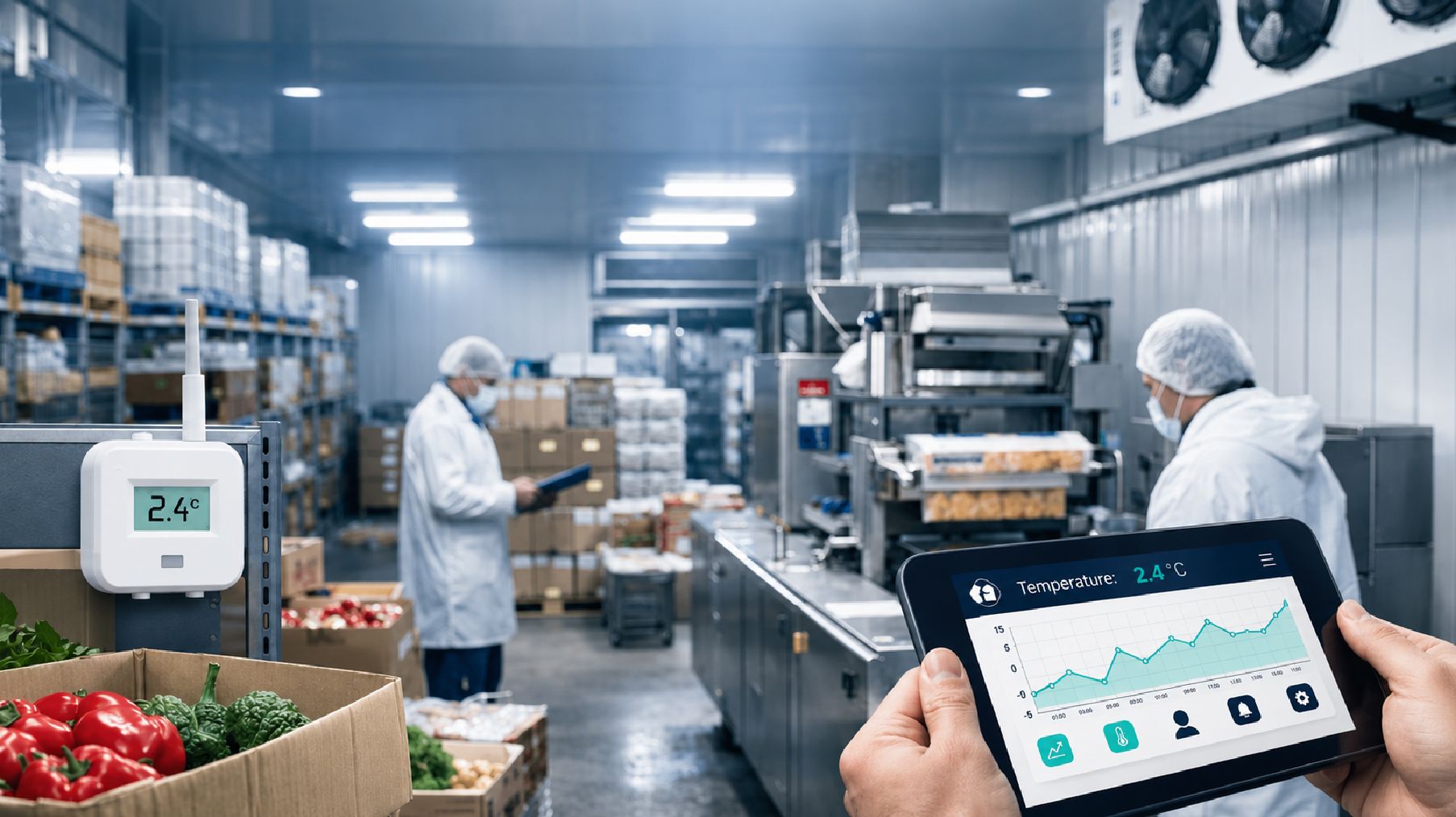
How a $150M Frozen Foods Distributor Eliminated Overnight Temperature Risk and Prevented $200K–$250K in Annual LossesFrozen Foods / CPG
How a $150M Frozen Foods Distributor Eliminated Overnight Temperature Risk and Prevented $200K–$250K in Annual Losses
A leading frozen foods distributor managed millions of dollars of temperature-sensitive inventory across its refrigerated fleet but had no visibility into trailer temperatures during overnight hours. This created a significant risk of product spoilage, inventory loss, and customer service disruptions.
How a $50M CPG Brand Replaced a $180K TPM System and Unlocked $300K in Annual Value Using Open-Source TPM and Agentic AICPG / Consumer Packaged Goods
How a $50M CPG Brand Replaced a $180K TPM System and Unlocked $300K in Annual Value Using Open-Source TPM and Agentic AI
A $50 million consumer packaged goods (CPG) brand was struggling with the growing complexity of trade promotion management. Despite investing heavily in a traditional TPM platform, many critical processes remained manual, including trade planning, accrual management, deduction reconciliation, customer profitability reporting, and trade spend analysis. The company was spending approximately $180,000 annually on TPM software while dedicating significant internal resources to managing promotions, deductions, and reporting activities.
How a $250M+ Frozen Food Manufacturer Cut Daily Inventory Reporting from 120 Minutes to 5 Minutes and Saved $44,000 AnnuallyFrozen Foods / CPG
How a $250M+ Frozen Food Manufacturer Cut Daily Inventory Reporting from 120 Minutes to 5 Minutes and Saved $44,000 Annually
A $250M+ frozen food manufacturer managed inventory across multiple third-party warehouses and cold storage facilities. Accurate inventory visibility was critical for supply planning, production scheduling, customer service, and inventory management. However, the company relied on a highly manual inventory reporting process that required data from twelve separate sources, including warehouse portals and accounting system reports, to be downloaded, reconciled, and consolidated twice each day.
How a $800M CPG Company Replaced OCR and Manual Data Entry with Agentic AI, Generating $592,000 in Annual Savings and a 4.6x ROICPG / Business Process Outsourcing
How a $800M CPG Company Replaced OCR and Manual Data Entry with Agentic AI, Generating $592,000 in Annual Savings and a 4.6x ROI
A leading business services provider supported multiple consumer packaged goods (CPG) companies with aggregate annual sales exceeding $800 million. The organization was responsible for transcribing retailer deduction documentation, validating deductions against trade promotion planners, proof-of-performance documents, and promotional contracts across multiple customers, channels, and retailer platforms. As client volumes increased, the process of extracting, validating, and transferring retailer data into spreadsheets, reports, and operational dashboards became increasingly dependent on manual labor.

Watch the Agent Work

See an infrastructure monitoring agent running live

A 3-minute walkthrough showing how the agent aggregates health data across every system, analyzes performance against a baseline, flags a system degrading before it fails, and keeps a full infrastructure history.

Server, network, and cloud health aggregated automatically from every system
Performance analyzed against a healthy baseline and updated continuously
An on-call tech alerted the moment a system starts degrading
Infrastructure history kept automatically to trace an incident back to its early signals
Get Your Agent Today →

No commitment. We demo with a real it workflow, not a sandbox.

Infrastructure Monitoring Agent Demo
3 min · No audio required

Built for IT Leadership

The right monitoring view for every role

Each deployment is scoped around how a specific role depends on system health visibility. Your CIO, IT manager, and helpdesk team each get what they need from monitoring that runs on its own.

CIO
Chief Information Officer

Stops hearing that a system outage impacted users before IT even knew there was a problem. Gets visibility into a degrading system while it's still fixable instead.

WHAT CHANGES
Full infrastructure health visible so uptime commitments are defensible
Incident timelines tied back to early warning signals, so response proves itself over time
Full infrastructure history available without asking the team to reconstruct it
Recurring outage patterns addressed at the source
IT MANAGER
IT Manager

Stops manually checking a dozen dashboards every day just to confirm systems are healthy. Gets one continuous monitoring view instead.

WHAT CHANGES
Every system combined automatically into one health view
Health baselines defined clearly instead of debated ad hoc
Monitoring refreshed automatically as new health data comes in
Time spent on infrastructure planning instead of manual dashboard checks
HELPDESK MANAGER
Helpdesk Manager

Stops fielding a wave of tickets about the same outage before anyone realizes the root cause is a failing system. Gets that visibility built into monitoring alerts instead.

WHAT CHANGES
Every system's health tracked alongside ticket volume for root-cause insight
Degrading system volume visible without a separate reporting pull
A failing system flagged through an alert, not a wave of tickets
Coverage maintained as infrastructure grows without adding manual work
Meet Our CEO Haroon Jafree, CPA
25 years as a CFO and finance leader, designing agents around workflows he personally ran
About WorkAgentic

Start with infrastructure monitoring. Explore more IT automation agents for your team.

WorkAgentic deploys infrastructure monitoring that tracks server, network, and system health continuously, so IT teams stop finding out about a failing system only after users start complaining.

FAQ

Questions about infrastructure monitoring

Clear answers on how the agent tracks system health and alerts your team, and what your team stays responsible for.

Infrastructure monitoring agents are AI agents that track server, network, and system health continuously, so an IT team knows about a degrading system before users start complaining, without someone manually checking dashboards across every monitoring tool. WorkAgentic builds infrastructure monitoring agents for teams whose current visibility into system health depends on whoever happens to be watching a dashboard when something goes wrong.
IT reporting consolidates broad metrics across tickets, systems, and licenses into a periodic leadership dashboard. Infrastructure monitoring tracks server, network, and system health continuously in real time, independent of any reporting cadence. This page covers the continuous monitoring agent. A separate IT reporting agent covers the periodic cross-system dashboard.
Infrastructure monitoring tracks ongoing system and network health. Patch management applies and tracks security and software updates across managed systems. This page covers the health monitoring agent. A separate patch management agent covers update deployment.
Servers, network devices, cloud resources, and any other infrastructure component your team defines are checked continuously for health signals such as CPU load, memory usage, disk space, and connectivity, so coverage extends across your full environment rather than just the systems someone remembered to watch.
The agent detects a health issue and alerts the right person with the relevant context, but a person on your team makes the actual fix. This page covers the monitoring and alerting agent, not an automatic remediation tool.
Yes. A system trending toward a failure state, such as disk space filling up or response times slowly increasing, is flagged automatically before it crosses into outage territory, so a team can intervene while the issue is still a warning sign rather than a live incident.
Yes. Monitored systems, health thresholds, and alert rules are updated over time as your infrastructure grows or changes, so monitoring coverage stays current rather than reflecting an environment that existed at initial setup.
Zero new software for your team to learn. The agent runs inside your existing systems. Your team sees the output, not the engine.

Get Started

Ready to stop finding out about a failing system after users complain?

Book a free 30-minute infrastructure monitoring review. We map your current systems and show you where automatic health monitoring saves your team the most time first.

Book a Free Infrastructure Monitoring Review →