AI Agents for Replenishment Planning

WorkAgentic builds AI agents for replenishment planning that generate real-time recommendations from live demand, stock, and lead time signals, adjust automatically when a demand spike or supply delay comes up, and coordinate replenishment across every location without a store-by-store manual review.

★★★★★4.8 / 5
No technical team neededBuilt by CPAs
Book a Free AI Workflow Automation

No commitment. Response within 24 hours.

Replenishment Planning

Six replenishment tasks your team stops running manually

Each agent connects to your live demand, stock, and lead time data and works continuously to keep replenishment current. No stale recommendations, no store-by-store manual review, no demand spike caught only after a stockout.

Automated Replenishment Recommendations

  • Recommendations generated from current stock, demand, and lead time automatically
  • Recommendations update continuously instead of on a fixed weekly cycle
  • Calculations run within the reorder policy your team already set
  • No more recalculating replenishment by hand item by item
  • Replenishment cycle time cut from days of review to minutes

Real-Time Stock and Demand Signal Integration

  • Live stock levels and demand signals pulled continuously, not on a delay
  • POS data, order history, and inventory feeds connected automatically
  • Recommendations reflect what is actually happening today, not last week
  • No more working from a stock report that is already out of date
  • New data sources added to the signal mix without rebuilding the process

Exception-Based Replenishment Adjustments

  • Recommendations adjusted automatically when an exception comes up
  • Demand spikes and supplier delays caught before the next scheduled review
  • What changed and why flagged alongside every adjustment
  • Stockouts avoided by catching disruptions while there is still time to act
  • Recurring exception patterns tracked so root causes can be addressed

Multi-Location Replenishment Coordination

  • Recommendations coordinated across every store, warehouse, or plant at once
  • Transfers between locations considered before a new order is recommended
  • One coordinated view instead of reviewing each location separately
  • New locations added to the coordination without rebuilding the process
  • Imbalances across locations flagged before they turn into a stockout

Lead Time Variability Handling

  • Actual lead time variability factored in, not just the average
  • Unpredictable suppliers get more buffer built into the timing
  • Consistent suppliers avoid carrying unnecessary extra buffer
  • Safety stock needs reduced without increasing stockout risk
  • Lead time patterns tracked per supplier and updated as they change

Replenishment Order Generation and Routing

  • Approved recommendations turned into replenishment orders automatically
  • Orders routed directly into your purchasing or procurement workflow
  • No manual re-entry between the recommendation and the resulting order
  • Order status tracked back to the original recommendation for reference
  • Pairs directly with purchase order automation for a fully hands-off flow

Client Reviews

What supply chain teams say after going live

4.8
★★★★★
Verified clients
★★★★★

Replenishment used to be a weekly exercise where someone recalculated every item by hand from a stock report that was already a few days old. WorkAgentic updates recommendations continuously now, and that weekly exercise just does not happen anymore.

★★★★★

We used to review replenishment for each of our locations one at a time, which meant a transfer opportunity between two nearby stores almost never got caught. WorkAgentic coordinates all of them at once now, so those transfers happen automatically instead of by chance.

★★★★

A sudden demand spike on one of our top items went unnoticed until we were already out of stock, since our review cycle only ran once a week. WorkAgentic flags a spike like that immediately now, well before the shelf actually goes empty.

★★★★★

We carried the same safety stock buffer for every supplier regardless of how reliable their lead time actually was. WorkAgentic accounts for each supplier's real variability now, and our overall safety stock has come down without any increase in stockouts.

★★★★

Our replenishment recommendations were only as current as the last stock report someone happened to pull, which was rarely the same day. WorkAgentic pulls live stock and demand signals continuously now, so recommendations always reflect what is actually happening today.

Our Process

How we deploy your replenishment agent

Five structured steps from scoping to go-live. No disruption to your current systems, reorder policy, or team workflows.

01
Discovery and Replenishment Process Audit
Maps your current replenishment cadence, locations, and every manual step your team runs each cycle.
02
Agent Design and Scoping
Signal sources, exception thresholds, lead time handling, coordination rules defined.
03
Build and Integration
Connect to demand/stock/lead time data, no IT required.
04
Pilot and Validation
Runs in parallel one full cycle; output reviewed.
05
Go-Live and Handoff
Agent takes over recommendation generation/exceptions; team keeps policy decisions.
01
Discovery and Replenishment Process Audit
Free 30-minute call, no preparation needed. We map your current replenishment cadence, locations, and every manual step your team currently runs each cycle. You walk us through it once. We take it from there.
Replenishment cadence and location map
Signal source and data freshness assessment
Recommended agent configuration for your locations

Supply Chain AI by Industry

Replenishment planning built for your industry

Each agent is configured for that sector's location structure, demand patterns, and replenishment cadence.

Built Around Your Workflow

Your demand and stock data are already the source of truth

WorkAgentic builds each replenishment agent around the demand, stock, and lead time data your team already has. Your locations, your reorder policy, and your exception thresholds are the foundation. The agent generates and adjusts recommendations in the background. Your team keeps the policy decisions.

Zero new software for your team to learn. The agent runs inside your existing systems. Your team sees the output, not the engine.
100+
systems we connect to
Any API
if it exports data, we connect
N
NetSuite
SAP
SAP
SF
Salesforce
x
Xero
ORC
Oracle
D365
Dynamics
SGE
Sage
100+
more systems

NetSuite, SAP, Salesforce, Xero, Sage Intacct, Oracle Financials, and any ERP or WMS with a structured API or data export

Case Studies

AI agents we have already built and deployed

Real deployments. Real outcomes. Each agent was built from scratch around the client's exact workflow.
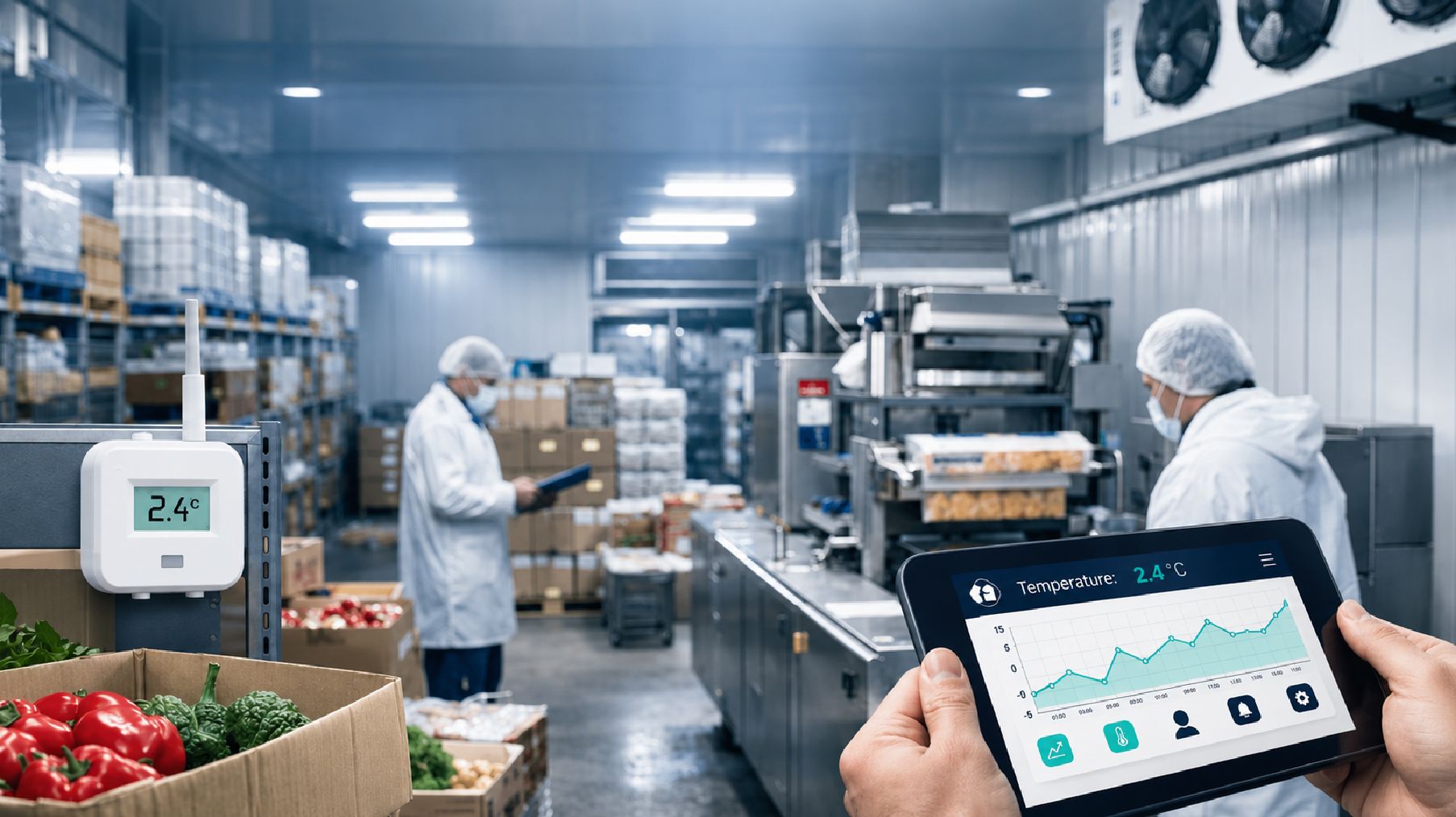
How a $150M Frozen Foods Distributor Eliminated Overnight Temperature Risk and Prevented $200K–$250K in Annual LossesFrozen Foods / CPG
How a $150M Frozen Foods Distributor Eliminated Overnight Temperature Risk and Prevented $200K–$250K in Annual Losses
A leading frozen foods distributor managed millions of dollars of temperature-sensitive inventory across its refrigerated fleet but had no visibility into trailer temperatures during overnight hours. This created a significant risk of product spoilage, inventory loss, and customer service disruptions.
How a $50M CPG Brand Replaced a $180K TPM System and Unlocked $300K in Annual Value Using Open-Source TPM and Agentic AICPG / Consumer Packaged Goods
How a $50M CPG Brand Replaced a $180K TPM System and Unlocked $300K in Annual Value Using Open-Source TPM and Agentic AI
A $50 million consumer packaged goods (CPG) brand was struggling with the growing complexity of trade promotion management. Despite investing heavily in a traditional TPM platform, many critical processes remained manual, including trade planning, accrual management, deduction reconciliation, customer profitability reporting, and trade spend analysis. The company was spending approximately $180,000 annually on TPM software while dedicating significant internal resources to managing promotions, deductions, and reporting activities.
How a $250M+ Frozen Food Manufacturer Cut Daily Inventory Reporting from 120 Minutes to 5 Minutes and Saved $44,000 AnnuallyFrozen Foods / CPG
How a $250M+ Frozen Food Manufacturer Cut Daily Inventory Reporting from 120 Minutes to 5 Minutes and Saved $44,000 Annually
A $250M+ frozen food manufacturer managed inventory across multiple third-party warehouses and cold storage facilities. Accurate inventory visibility was critical for supply planning, production scheduling, customer service, and inventory management. However, the company relied on a highly manual inventory reporting process that required data from twelve separate sources, including warehouse portals and accounting system reports, to be downloaded, reconciled, and consolidated twice each day.
How a $800M CPG Company Replaced OCR and Manual Data Entry with Agentic AI, Generating $592,000 in Annual Savings and a 4.6x ROICPG / Business Process Outsourcing
How a $800M CPG Company Replaced OCR and Manual Data Entry with Agentic AI, Generating $592,000 in Annual Savings and a 4.6x ROI
A leading business services provider supported multiple consumer packaged goods (CPG) companies with aggregate annual sales exceeding $800 million. The organization was responsible for transcribing retailer deduction documentation, validating deductions against trade promotion planners, proof-of-performance documents, and promotional contracts across multiple customers, channels, and retailer platforms. As client volumes increased, the process of extracting, validating, and transferring retailer data into spreadsheets, reports, and operational dashboards became increasingly dependent on manual labor.

Watch the Agent Work

See a replenishment agent running live

A 3-minute walkthrough showing how the agent generates a replenishment recommendation from live stock and demand data, adjusts for a sudden demand spike, coordinates a transfer between two locations, and routes the resulting order.

Recommendation generated from live stock and demand signals
Recommendation adjusted automatically for a demand spike exception
Transfer between two nearby locations coordinated instead of a new order
Approved recommendation routed into the resulting order automatically
Get Your Agent Today →

No commitment. We demo with a real supply chain workflow, not a sandbox.

Built for Supply Chain Leadership

The right replenishment setup for every role

Each deployment is scoped around how a specific role uses replenishment data. Your VP of Supply Chain, replenishment manager, and planning team each get what they need from recommendations that update themselves.

VP SUPPLY CHAIN
VP of Supply Chain

Stops finding out about a stockout only after it has already happened. Gets continuous visibility instead.

WHAT CHANGES
Replenishment status visible across every location from one view
Demand spikes flagged before a stockout instead of after
Multi-location coordination consistent without manual oversight
Recurring exception patterns visible so root causes can be addressed
REPLENISHMENT
Replenishment Manager

Stops recalculating replenishment by hand from a stock report that is already stale. Gets recommendations that update themselves instead.

WHAT CHANGES
Recommendations generated automatically from live demand and stock signals
Exceptions adjusted for automatically without waiting for the next cycle
Multi-location transfers considered before a new order is recommended
Time spent on judgment calls instead of manual recalculation
PLANNING TEAM
Planning Team

Stops finding out about a demand spike or a supply delay after it has already caused a stockout. Gets flagged exceptions instead.

WHAT CHANGES
Replenishment signals monitored continuously so exceptions surface early
Adjustments logged with context so nobody has to reconstruct a decision later
Exceptions cleared on a defined cadence so nothing carries over unresolved
Coverage maintained across more locations without adding headcount
Meet Our CEO Haroon Jafree, CPA
25 years as a CFO and finance leader, designing agents around workflows he personally ran
About WorkAgentic

Start with replenishment planning. Add more supply chain workflows as your team grows.

WorkAgentic deploys replenishment planning automation that generates real-time recommendations from demand, stock, and lead time signals, adjusts automatically for exceptions, and coordinates replenishment across every location.

FAQ

Questions about replenishment planning automation

Clear answers on how the agent generates recommendations, handles exceptions, coordinates locations, and what your team stays responsible for.

Replenishment agents are AI agents that generate day-to-day replenishment recommendations from real-time demand, stock, and lead time signals, adjust automatically when an exception occurs, and coordinate replenishment across every location. WorkAgentic builds replenishment agents for teams who currently make replenishment decisions from stale data, review each location separately by hand, and only catch a demand spike or supply delay after it has already caused a stockout.
Inventory optimization sets the policy: reorder points, safety stock levels, and how much to hold based on demand and lead time. Replenishment executes against that policy day to day, generating the actual recommendation for what to reorder right now based on current stock, live demand signals, and any exceptions that have come up. WorkAgentic treats these as separate agents that work together. This page covers the ongoing replenishment recommendation agent. A separate inventory optimization agent covers the underlying policy.
The agent pulls current stock levels, live demand signals, and known lead times for each item and location, then calculates what should be reordered right now to stay within the policy your team has set. Recommendations update continuously instead of being recalculated on a fixed weekly or monthly cycle.
Yes. The agent generates and coordinates replenishment recommendations across every store, warehouse, or plant at once, accounting for transfers between locations where that makes more sense than a new order. A multi-location team gets one coordinated view instead of reviewing each location separately.
The agent adjusts the replenishment recommendation automatically when an exception like a demand spike or a supplier delay comes up, instead of waiting for the next scheduled review to catch it. Adjustments are flagged so your team can see what changed and why before the order goes out.
Yes. The agent factors in how much a supplier's lead time actually varies, not just its average, when timing a replenishment recommendation. Items with unpredictable lead times get more buffer built into the timing, while consistent suppliers do not carry unnecessary extra buffer.
No. The agent generates and adjusts replenishment recommendations automatically. Your team keeps responsibility for setting the underlying policy, approving exceptions, and making judgment calls the agent flags. The agent removes the manual recalculation work so your team spends time on the decisions that need judgment.
Zero new software for your team to learn. The agent runs inside your existing systems. Your team sees the output, not the engine.

Get Started

Ready to stop recalculating replenishment by hand?

Book a free 30-minute replenishment process review. We map your current cadence, locations, and signal sources and show you where automation saves the most time.

Book a Free Replenishment Process Review →